Pop quiz! True or False?
Over the past forty years, the world’s population has doubled. Our use of water has quadrupled. Yet the amount of water on Earth has stayed the same.
30% of pipes in systems that deliver water to more than 100,000 people are between forty and eighty years old.
Out of 118 water samples taken in Cahokia Heights eight were contaminated with E.coli.
If you said all of these are true — you’re correct!
Introduction
We are six students from the Community-Oriented Digital Engagement Scholars (CODES) at Southern Illinois University Edwardsville (SIUE) working to educate the youth about good water conservation practices in hopes that they bring these habits in their home.
Meet the team!
Faculty

Community Partner: The Jackie Joyner-Kersee Foundation
We partnered with the Jackie Joyner-Kersee Food, Agriculture, and Nutrition Innovation Center (JJK FAN), a growing organization dedicated to supporting children and families. In addition, we worked with The Danforth Center, whose partnership with JJK FAN fosters curiosity in technology and a passion for innovation.
From the Danforth Center Education Research and Outreach Lab, Zachary Stafford, Danforth’s STEAM+Ag (Science, Technology, Engineering, Mathematics, and Agriculture) Educator and Kurly Taylor Jr., Strategic Partnership Manager, helped us understand their needs, especially the need for hands-on activities that engage kids in their community.
Project Summary
Our goal is to help the next generation become knowledgeable about water and climate issues. To do this, we organized a water fair at Jackie Joyner-Kersee Academy (JJK Academy) for students ages eight to ten. The fair included four stations focused on water conservation vocabulary, soil, water runoff, and filtration. By engaging in these hands-on activities, children can begin to understand water conservation and create habits that reflect pride in protecting their environment.
This work is especially important in the St. Louis region, which sits on a floodplain and has aging, deteriorating infrastructure due to its heavily industrial background. For this reason, communities such as Cahokia Heights (formerly Cahokia, Centreville, and Alorton) and East St. Louis experience sewage flooding during heavy rains.
Our “Wicked” Problem
What is a “wicked” problem? We define a “wicked” problem as a problem that spans many different areas; therefore, it doesn’t have an exact solution because one change can affect another part of the overall problem, leaving it unsolved.
The “wicked” problem we chose to address is the lack of water conservation education in schools. Based on our research, we created fun, interactive lessons for K–8 students and tested them through our water fair. This allowed us to see how children learn and how educators might teach these topics. We hope to inspire more schools to recognize the importance of early water education, as it can make a difference in our future water resources.
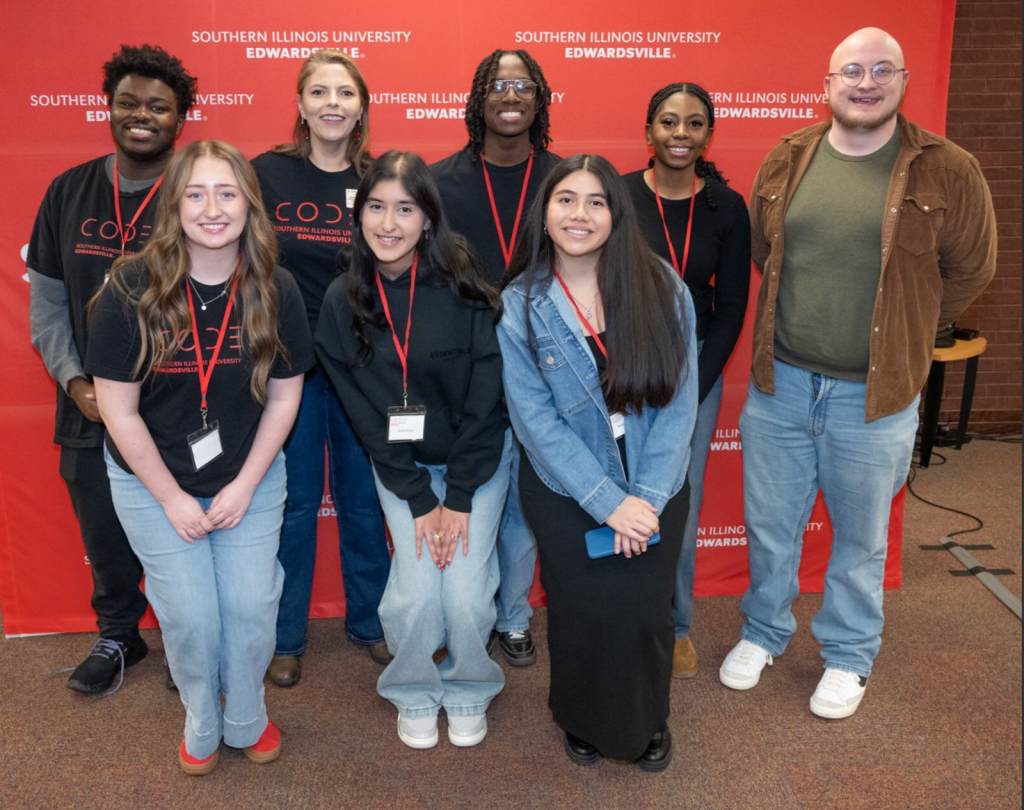
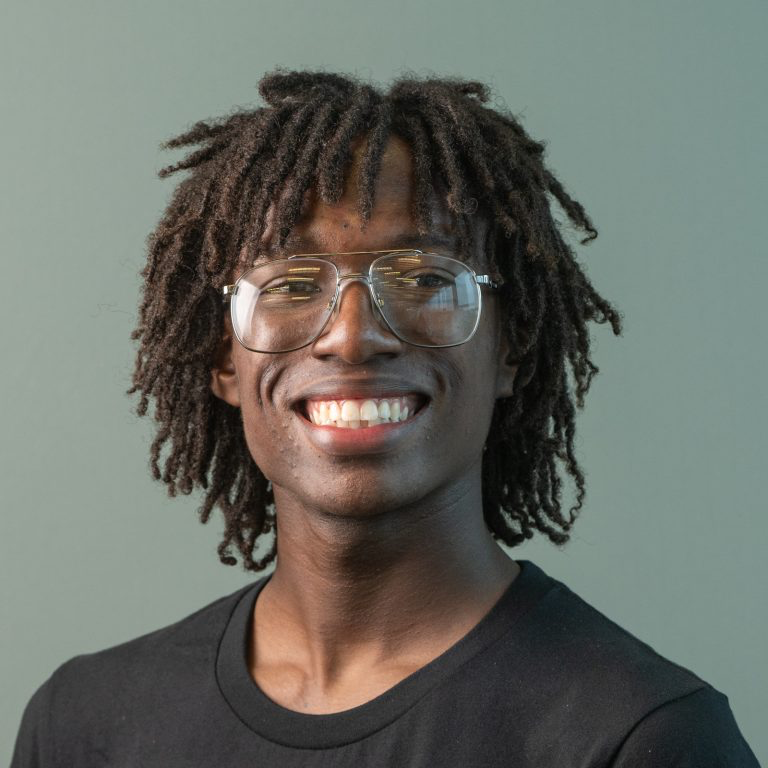
Back row, left to right: Justin Richerson, Dr. Adriana Martinez, Marques Rutlin, Tamiria Dixon, Zachary Stafford
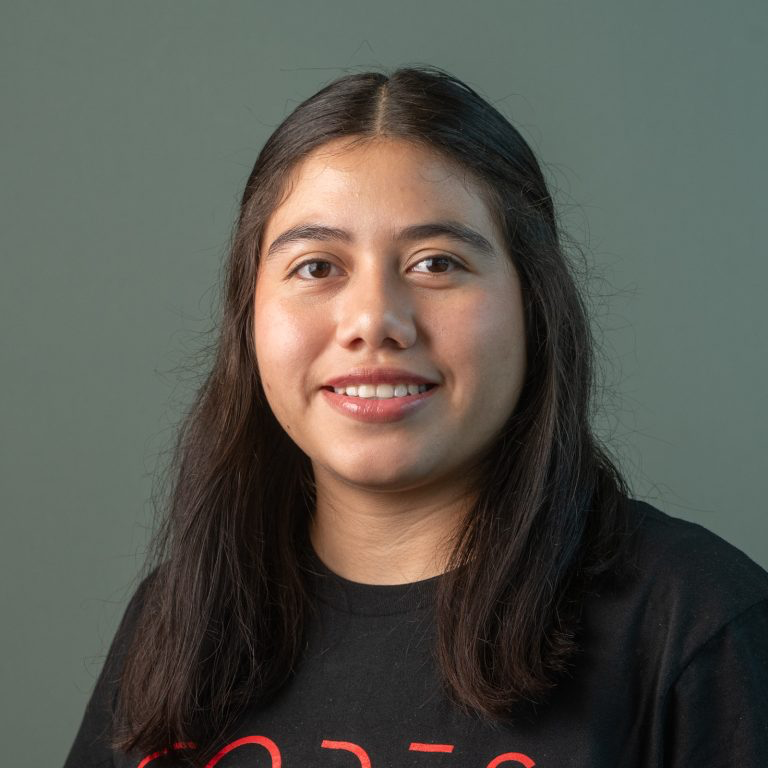
Front row, left to right: Payton Plummer, Sonia Sheryr, Alexandra Guerrero
Research Questions
Across two years of research, we focused on two guiding questions to investigate our “wicked” problem:
- How can the new generation become advocates for their community?
- How can we shed light on areas like Cahokia Heights that face water inequity?
- How can we implement education for youth, influencing a new generation to become aware of water conservation issues?
These questions shaped our work on about water equity and youth education.
Research Methods
We interviewed local educators and organizations, surveyed nearly 200 educators, and learned from SIUE’s STEM Center faculty about lesson plan development. These methods helped us understand our “wicked” problem and barriers educators face, and guided our decision to focus on after-school programming, which has fewer restrictions.
During our second semester in CODES, we immersed ourselves in research, gathering data, and overall familiarizing ourselves with water inequity. We created a survey, “Teachers’ Perspectives on Water Conservation Education,” which we sent to educators to get a better understanding of whether pedagogical practices were taught in the classroom to address water equity issues.
We received 196 responses, mostly from teachers of grades 6–8.
Educators agreed that hands-on labs work best, yet most do not teach water conservation; the main reasons why they do not center on a lack of awareness, lack of funding, and strict curriculum requirements. Thus, we learned that either teachers lack material and/or financial resources or knowledge to implement hands-on activities to educate students on water conservation.
Our results were eye-opening and arguably the most important takeaway. Thus, we presented our findings at SIU System Day at the Illinois State Capitol and will follow up in March 2026.
Click here to learn more about our survey results and findings.
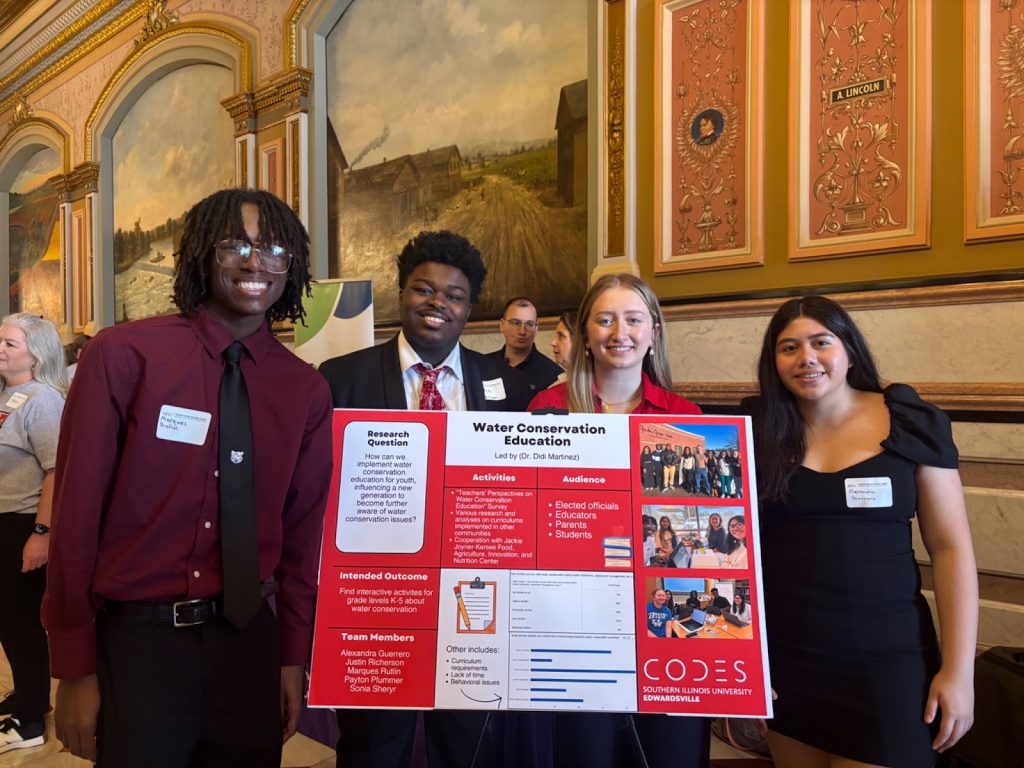
Left to right: Marques Rutlin, Justin Richerson, Payton Plummer, Alexandra Guerrero
Findings + Themes
In addition to our surveys, we also conducted interviews with Danforth’s Zachary Stafford and Dr. Andrea Dexheimer, research assistant professor in the SIUE Center for STEM Research, Education, and Outreach.
Zach Stafford + JJK Academy
Our interview with Stafford, who works with after-school children at the JJK Academy, and who discussed how the kids at the academy learn and what changes are feasible to their after-school program, revealed several themes:
Technology as a learning tool: Stafford expressed interest in using drones and imaging to help kids visualize water issues.
“Drones! That’s what I’m trying to get right now. We have a good drone program, it’s probably one of my favorite ones. And I’ve been trying, begging and begging for a thermal imaging drone. And just no luck, no funding… I think stuff like that, that’s easy for kids to understand, where they can automatically pull up a chart, I think is great.
Zach Stafford
Hands-on, science-forward activities: He emphasized that science often takes a backseat to math and reading, although “water conservation hits a lot, and science [but] they’re not the focus kind of test scores.” Thus, making after-school programs a valuable space for hands-on learning will remediate the gap in state science education requirements.
Connecting learning to home life: Stafford wants students to take what they learn and apply it in their homes and communities, hoping they can make a lasing difference in their community.
Click here to read the full transcription of Stafford’s interview.
Dr. Andrea Dexheimer + SIUE’s Stem Center
One of our last steps in our research semester was visiting SIUE’s STEM Center. Dr. Dexheimer, who shared with us all the things that go into finding and creating lesson plans (e.g., Bloom’s Taxonomy). This was especially helpful for both those who constructed water fair activities as well as plans for the water fair toolkit.
See below to browse and visit the various products we created to solve our “wicked” problem and empower change through water education at JJK Academy!
JJK Academy’s CODES Water Fair
Runoff with Water Knowledge
Water Word Wonders
The Dirt Detective
Water Fair Toolkit

After a year of research and project planning, we hosted our water fair at JJK Academy in October 2025, with four stations each created and facilitated by individual CODES team member:
“The Magic of Water Filtration” by Justin Richerson
“The Dirt Detective” by Marques Rutlin
“Runoff with Water Knowledge” by Sonia Sheryr
“Water Word Wonders” by Alexandra Guerrero
These stations engaged students through hands-on learning about water and conservation practices.
Click here to read more about our water fair.
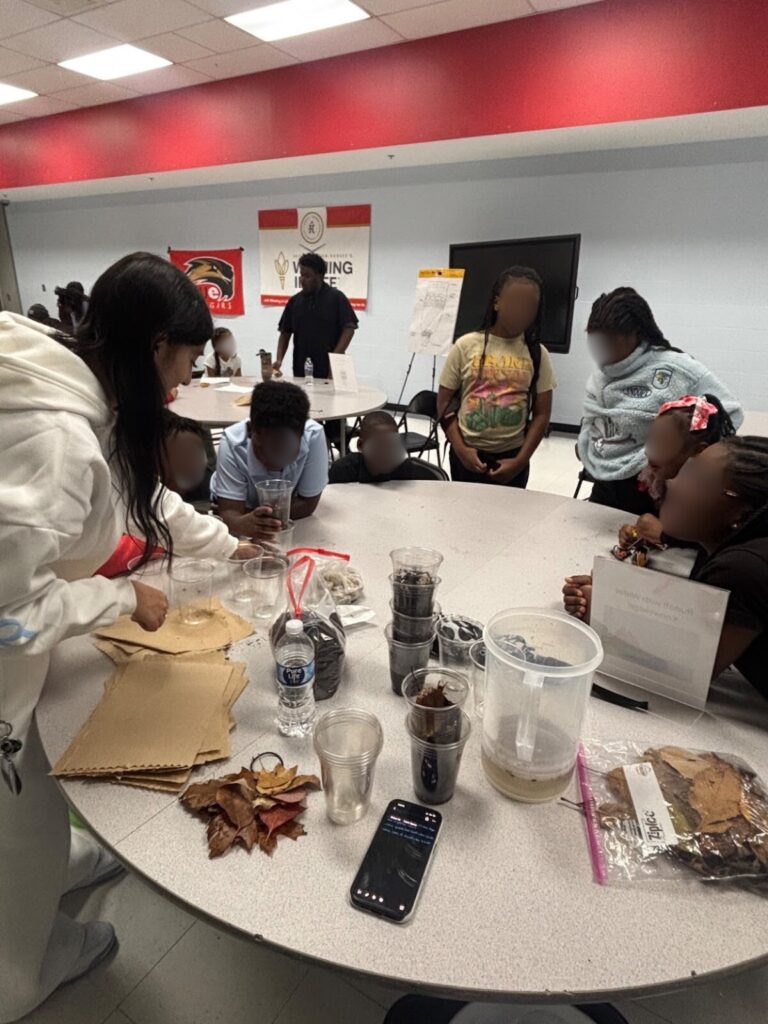
The fair also supported Payton’s work on the Water Fair Toolkit discussed below, which helps teachers implement these lessons in their own classrooms or programs.
Payton Plummer’s Water Fair Toolkit
After the fair, together as a team we discussed the fair’s successes and needs for improvement. Based on our findings, Payton created a comprehensive toolkit for communities wanting to host similar events. She created an open-access Google document to provide the toolkit, which is organized with tabs that include key materials future users for easily navigate and understand. The tabs include
Read Me — an overview and navigation of the toolkit
Logistics — planning details to host a water fail
CODES Water Fair — full description of our event and our various considerations
Topic Section Tabs — water conservation topics that can be used to create lesson plans and activity stations (e.g., water equity, water conservation, water filtration, community gardens and flooding).
Each topic includes an overview, instructions, supplementary materials, photos, and hands-on activities designed to leave a lasting impact on users and their communities.
Tamiria Dixon’s Local Organizations Interviews
Tamiria interviewed three staff members from local education organizations to understand how they teach water conservation to the public. This process took approximately a month to complete, including interviews and transcription coding. The three educators described their partnerships with school districts and the materials they provide, such as soil to help immerse students in hands‑on learning experiences.
Through this process, Tamiria created a thematic analysis based on the most frequently repeated ideas. This helped her understand the importance of engaging educational techniques. Just like the National Great Rivers Research and Education Center, we were able to apply these same strategies to our 2025 Water Fair. Ultimately, the experience allowed students to walk away with valuable water conservation practices they can apply in daily life.
Conclusion
All in all, we six sophomores are feeling bittersweet about wrapping up our final CODES project. We have all played an important role in the research and implementation, but we couldn’t do it without our research team professor, Dr. Adriana Martinez, SIUE Environmental Sciences professor and department chair. She has been an incredible mentor, guiding us every step of the way. We are beyond grateful to have had her support, guidance, and willingness to collaborate with us—starting when we were six brand‑new freshmen away from home for the first time.
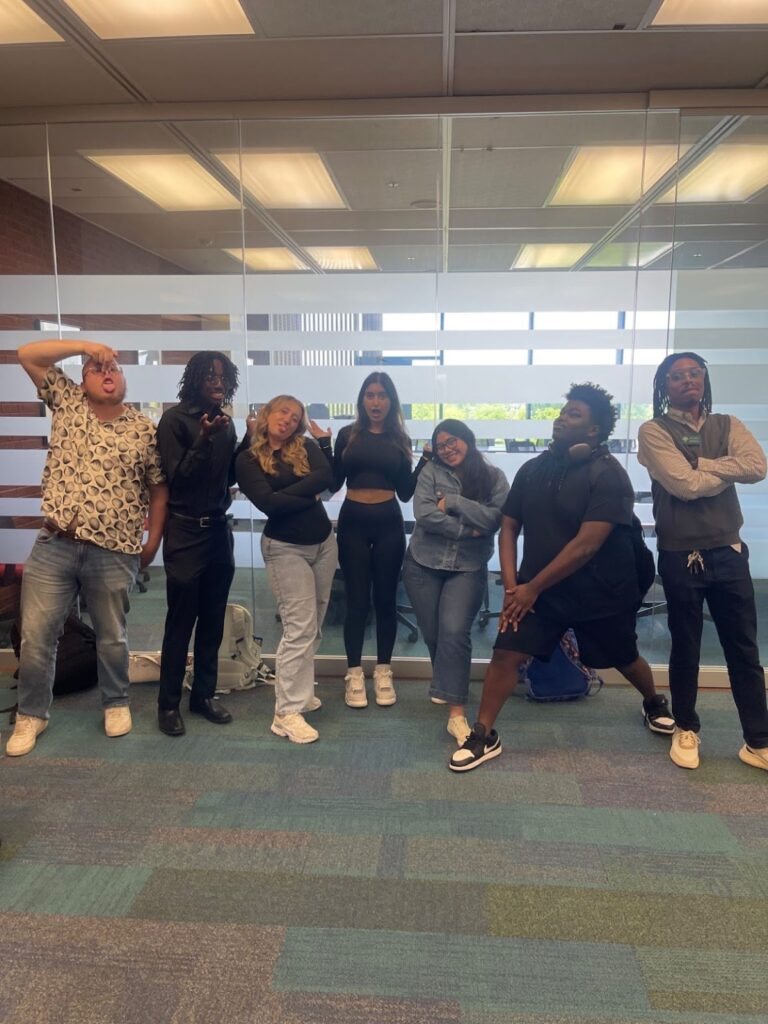
Our next step for this water education is to distribute our work to other communities. We are still working with Kurly Taylor, who is interested in expanding this education further. We hope to reach additional communities experiencing the same wicked problem we are.
Appendix: Supplementary Materials
Bloom’s Taxonomy
Information on CODES Water Fair
Survey Results: Teachers’ Perspectives on Water Conservation
Zach Stafford Interview Transcription
Water Fair Toolkit (In progress)
Works Cited
Community-Oriented Digital Engagement Scholars (CODES)
Jackie Joyner-Kersee Academy (JJK Academy)
Jackie Joyner-Kersee Food, Agriculture, Nutrition, and Innovation Center (JJK FAN)
National Great Rivers Research and Education Center
Southern Illinois University Edwardsville (SIUE)
This Black Town Has E. Coli in Its Drinking Water, but Feds Just Cut Support
Experts: U.S. water infrastructure in trouble – CNN.com
Water supplies in crisis – BBC News